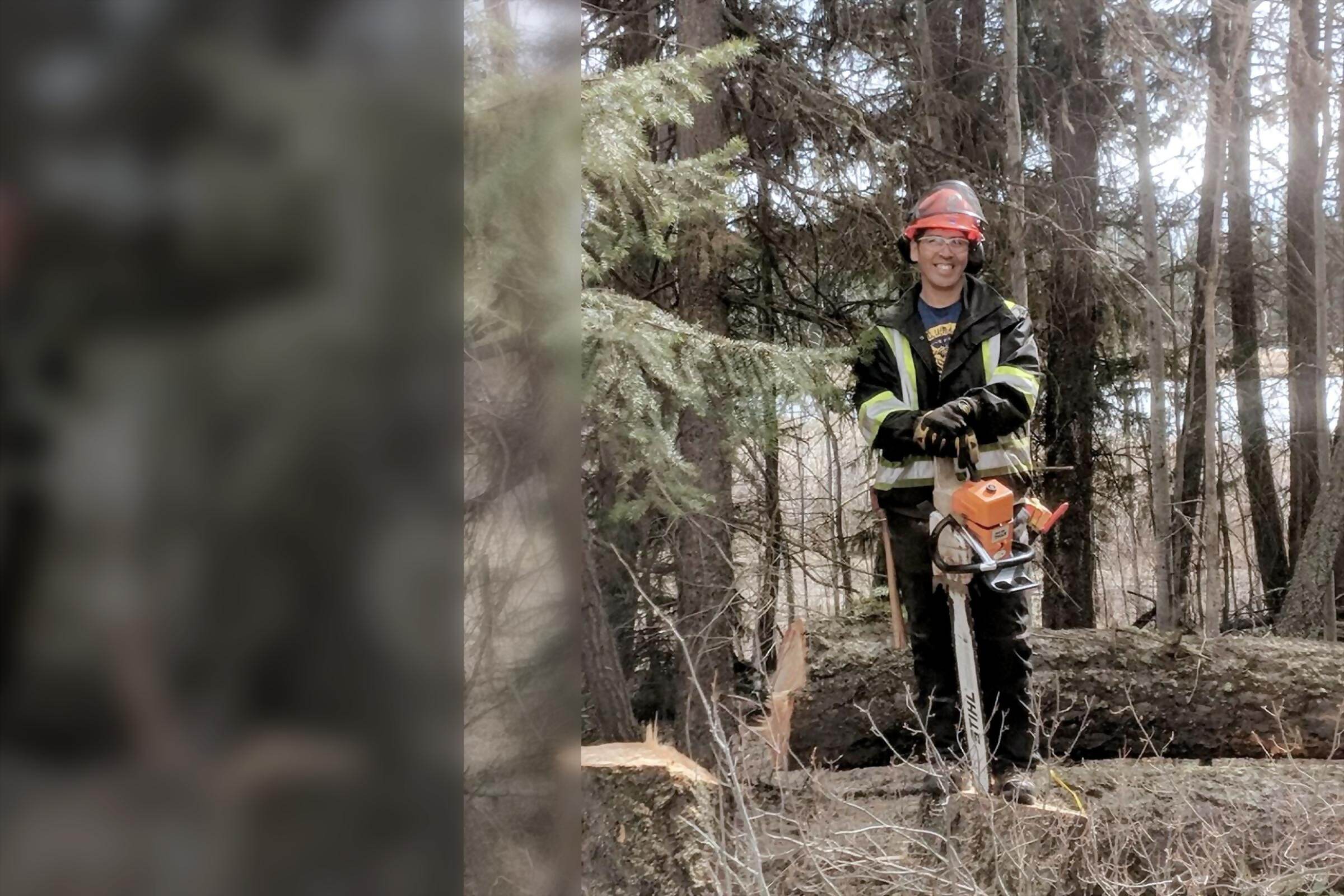
Taking down what shouldn't be standing. Since 1990.
Danger Tree Falling &
FireSmart Contractor
100 Mile House, BC
New Era Falling & Forestry is a certified falling outfit working out of 100 Mile House, run by a danger tree faller with 36 years on wildfire and in the timber. Danger trees, FireSmart fuel mitigation, storm and insurance work across the South Cariboo. $5M liability. Fully insured. 100% recommended on 19 reviews.
Somebody who actually knows what they're looking at walks the property. No charge, no obligation, no sales pitch from a truck.
What comes down, what stays, where the wood goes, and what it costs. On paper, before a saw comes out of the truck.
We don't leave you a mess to deal with. Chipped, hauled, or bucked and stacked for firewood, agreed in advance.
What we do
Five things.
Done properly.
Most tree companies are landscapers who bought a saw. This is a falling outfit, production falling, danger tree work and wildfire fuel mitigation, run by somebody who has been on fire lines since 1990.
Danger Tree Assessment & Falling
The leaning, the dead, the fire-killed, the ones with a rotten root collar you can't see from the ground. Assessed properly, then put on the ground where it's supposed to go.
Read more → 02FireSmart Fuel Mitigation
Thinning, ladder-fuel removal and crown spacing through the Home Ignition Zone. The work the District's free assessment tells you to do, actually done.
Read more → 03Tree Removal & Bucking
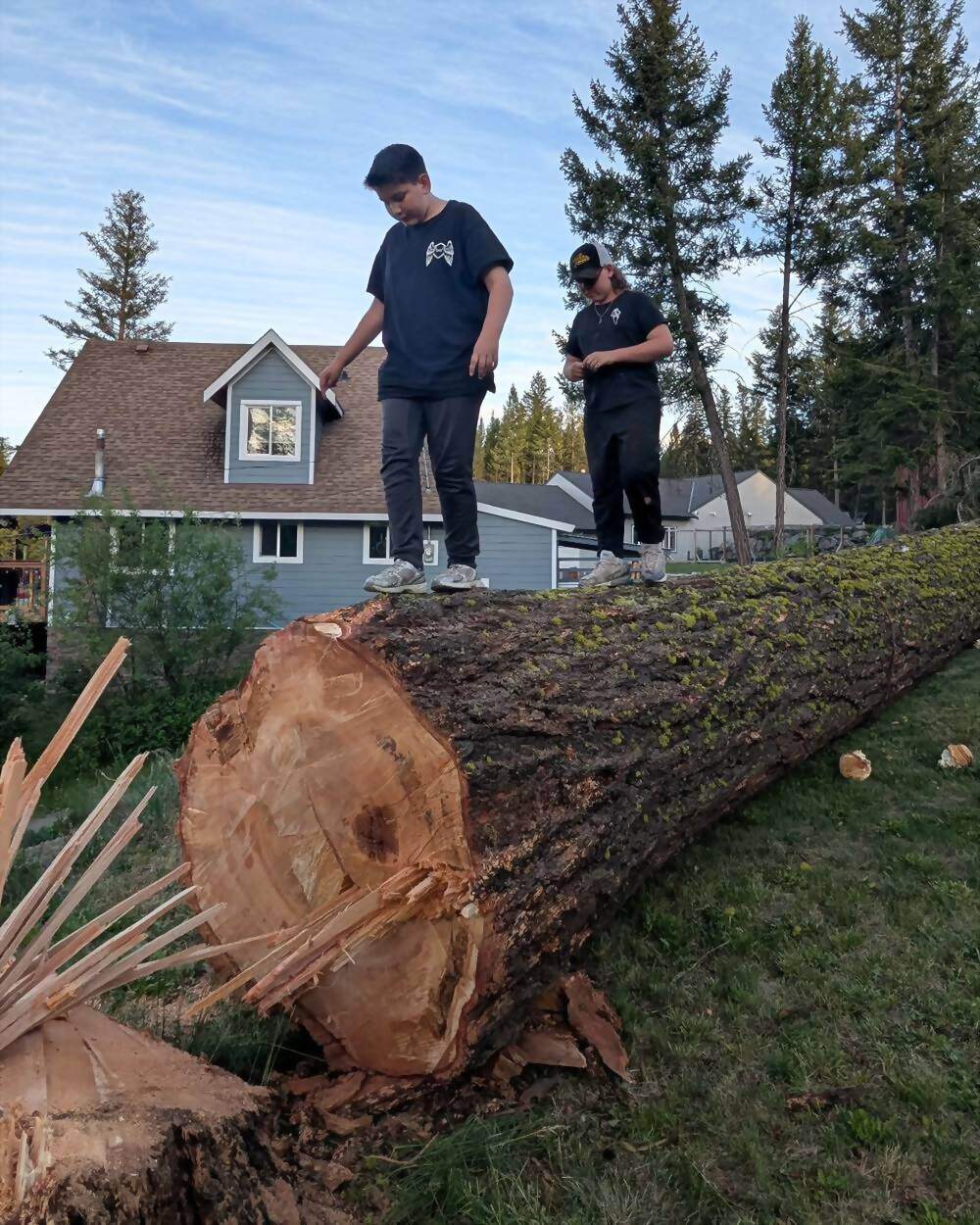
Standard removals around houses, shops, driveways and lake lots. Bucked, cleaned up, and hauled or left as firewood, your call.
Read more → 04Storm Damage & Insurance Claims
Tree on the roof, across the driveway, through the fence. We work insurance claims and we carry $5M liability, so your adjuster has something to read.
Read more → 05Lot & Right-of-Way Clearing
Building sites, driveways, fence lines, access roads and utility corridors. Selective or clean to the dirt.
Read more →The one that matters
What the law
actually says.
“A tree that is a hazard to a worker due to (a) its location or lean, (b) its physical damage, (c) overhead conditions, (d) deterioration of its limbs, stem or root system, or (e) any combination of the conditions in paragraphs (a) to (d).” WorkSafeBC OHS Regulation s. 26.1, definition of “dangerous tree”
Section 26.11 goes further. If anyone is going to be exposed to that tree, it gets felled, or it gets a risk assessment by someone with training WorkSafeBC accepts, and the recommendations get carried out before work starts.
That's not an opinion from the deck with a coffee. It's a regulated assessment, and there are only a handful of people in the South Cariboo qualified to make it.
FireSmart
Some trees you don't
take down. You
manage them.
The District of 100 Mile House will send someone out to assess your property for wildfire risk, free. So will the Cariboo Regional District. Then they hand you a report and a list, and no one to call.
The District's Community Wildfire Resiliency Plan covers 2,655 hectares of wildland-urban interface around town. 37.4% of it is private land the municipality cannot touch. Parts of it are rated High and Extreme by the Provincial Strategic Threat Analysis. Beetle-killed pine, dense Douglas-fir, ladder fuel from the ground into the canopy.
That private land is your yard. We do the work on it.
The Home Ignition Zone : the current model
BC remodelled this. It's three zones now, not four, the old 30 to 100m zone was dropped because radiant heat is unlikely to ignite a structure past 30 metres. If a contractor is still showing you a four-zone diagram, their information is out of date.
Immediate Zone
The most vulnerable ground on your property. Cleared to mineral soil or gravel. No woody plants, no bark mulch, no cedar or juniper against the wall, no firewood stacked on the deck. This is where embers land.
Intermediate Zone
Fire-resistant plantings only. Woody debris and needle litter removed. Firewood piles and combustible storage relocated outside the zone. Managed so it can't carry fire to the house.
Extended Zone
Selective conifer removal to break up crown continuity. Lower branches pruned to 2 metres to kill the ladder from the ground into the canopy. Fallen debris cleared. The goal is to drop the fire out of the crowns before it reaches the Intermediate Zone.
90%
As many as 9 in 10 structures damaged or destroyed in a wildfire are ignited by embers, not by a wall of flame. Which is why the first metre and a half matters more than the tree line. (BC Wildfire Service)
Free tipping in three towns
The Cariboo Regional District waives tipping fees on vegetative debris in Lac La Hache, 108 Mile Ranch and Lone Butte. If you're in one of those, your disposal cost on a FireSmart job drops to the haul.
The man on the saw
The crew that trains
the fire department.
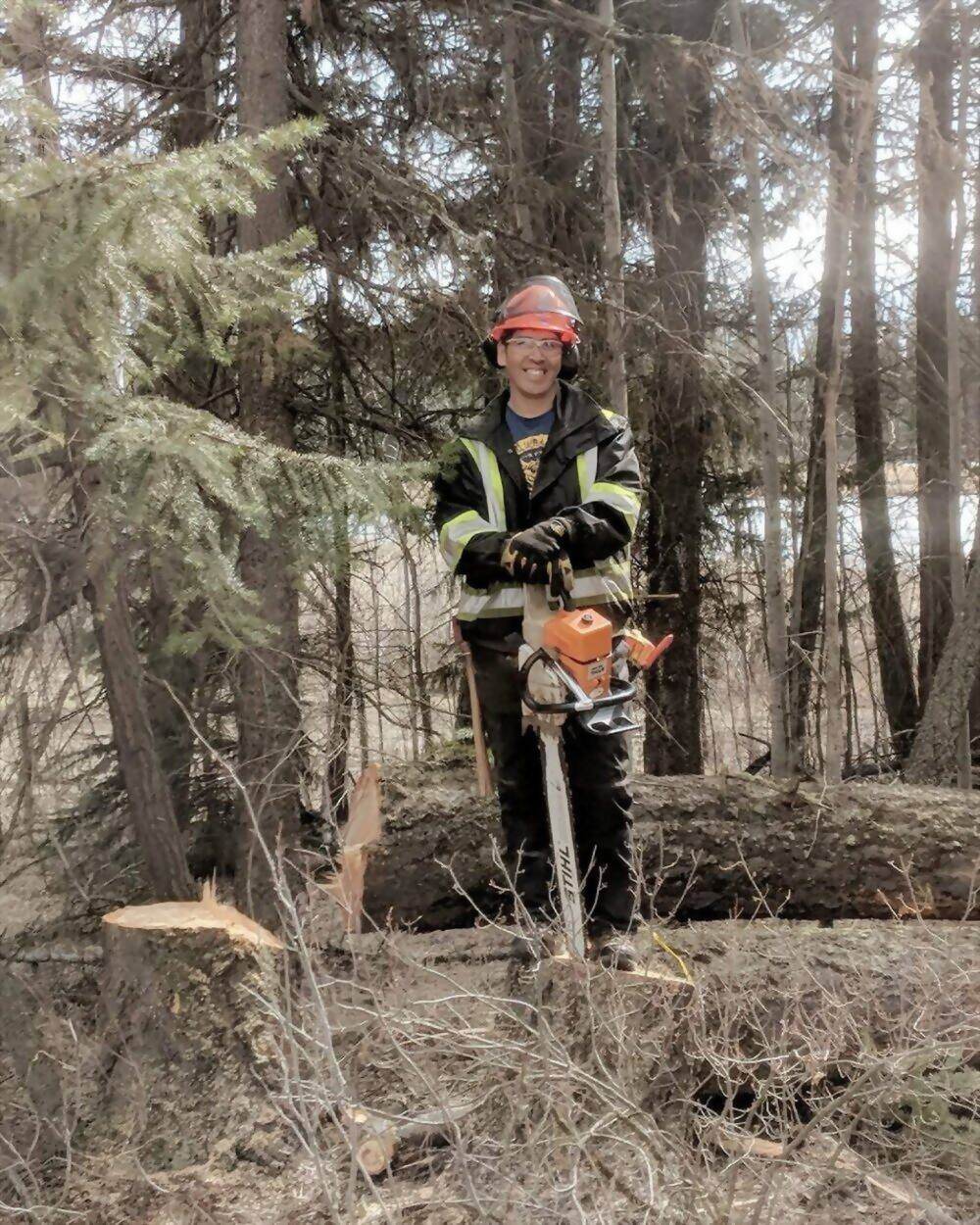
Born and raised at Canim Lake. Fighting wildfire since 1990: contract crews first, then the Ministry of Forests. Led the 100 Mile Stormriders from 1994 to 2001.
Today he heads Fire Brigade Bravo 100, a Type 3 unit crew, where his job is danger tree assessment and falling, taking down the trees that would otherwise come down on firefighters and equipment. He's run prescribed burns with the Canim Lake Band, done fuel mitigation contracts for the District of 100 Mile House, and taught S-100 wildland fire training to the volunteer fire department at 70 Mile.
On the record, about the work: “I love the science of it all. The weather, how different kinds of fuel burn, the slopes…”
That's who's looking at your tree.
Review and reach figures from the New Era Falling & Forestry Facebook page, July 2026.
What people say
1,700 people follow
the work already.
Nineteen recommendations on the Facebook page. Every one of them positive. The reel footage has been watched over half a million times, which probably says more than any paragraph here does.
Put it down exactly where he said it would go, even though the lean was not favourable.
“They are amazing, did a fantastic job with a very difficult tree. Highly recommend using them.”
Where we work
The South Cariboo.
All of it.
Home ground is 100 Mile House. From there we cover the lakes, the ranches and the back roads. The places where the driveway is long, the timber is close to the house and nobody else wants to drive out.
Further afield for contract falling, fuel mitigation and wildfire work. If you're outside this list, call and ask.
Common questions
Before you call.
Do you charge for an estimate?
How far do you travel?
Are you insured?
Do you do the cleanup?
Can you take a tree down beside my house?
Send us a photo of the tree.
The fastest quote you'll get is a photo showing the tree and the house in the same frame. We can usually tell you over the phone what it takes, and whether you actually need it down at all.